
Few details define a car’s character as sharply as its wheels. A well-chosen set transforms a design from ordinary to memorable, while poor choices can make even an attractive model appear mismatched.
The wheels that became part of the car
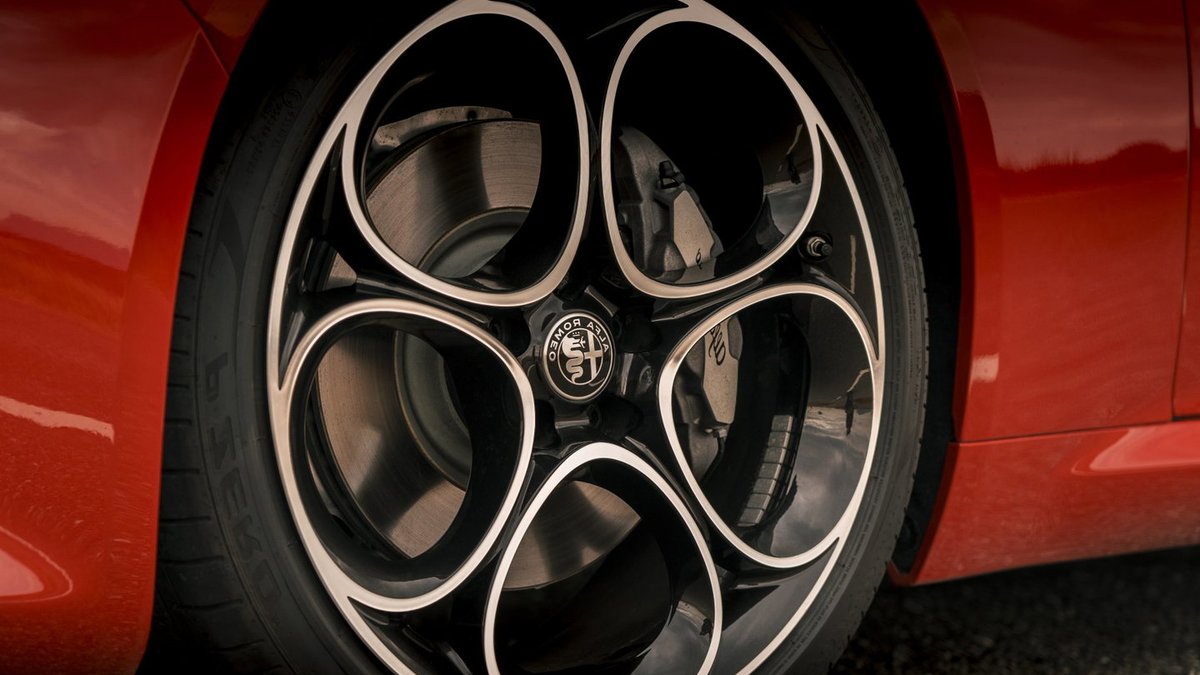
Some factory alloys don’t just complement a vehicle—they become inseparable from its identity. Alfa Romeo’s teledials serve as a prime example. Named for their resemblance to old rotary phones, the circular cutouts first appeared on the 1960s 33 Stradale. The design has since been adapted for models like the GTV, 156 GTA, 4C, Giulia, and Tonale SUV.
Their appeal extends beyond aesthetics. The openings expose the brakes, adding a mechanical edge that enhances the driving experience. For many enthusiasts, these wheels are as much a part of Alfa Romeo’s identity as its shield grille.
BMW’s Style 37 M Parallels, often called the M Parallel, achieve a similar effect. Introduced on the E38 7 Series and E39 5 Series, the 18-inch wheels feature five pairs of thick, parallel spokes with a deep outer lip. The design is simple but deliberate, giving the cars a more refined presence without overpowering their clean lines.
They work best on the E38, where their broad, polished faces match the saloon’s low stance. Aftermarket copies have attempted to replicate the look, but few match the original’s balance of subtlety and presence.
When unconventional designs just work
Saab’s Super Aero three-spoke wheels break from convention. Most three-spoke designs appear unfinished, but the Super Aeros, fitted to the 9000 Aero, stand out. Their three broad, softly curved spokes and deep outer rim give them a sculptural quality.
These wheels embody Saab’s philosophy: functional, distinctive, and unlike anything from German rivals. They suit the 9000’s squared-off bodywork, reinforcing the car’s unique character. Their appeal lies in their refusal to conform.
The Renault Clio Williams takes a different approach. Its 15-inch Speedline alloys feature a gold finish, a bold choice that contrasts with the car’s only available color, Metallic Sports Blue. The combination shouldn’t work—blue paint, gold wheels, and yellow fog lights—but Renault made it cohesive.
Related: Complementing Brilliance: Choosing Earrings and Necklaces to Pair with Lab-Grown Diamond Rings
The wheels’ simple multi-spoke design gives the Clio a rally-inspired look without appearing overly aggressive. On another car, the gold finish might seem excessive. Here, it fits perfectly.
If any wheel could be called timeless, it’s Porsche’s Fuchs. Developed with metals specialist Otto Fuchs, the forged aluminum wheels debuted on the 1967 911 S. Their five-leaf design reduced unsprung weight while creating a distinct visual identity.
Over the decades, the design has been adapted for different models, including the wide, deep-dished versions on the 930 Turbo. More than 50 years later, Porsche still uses modern versions on heritage-inspired 911s because they remain popular.
Understated strength in simplicity
Not every great wheel needs to be flashy. Volvo’s Pegasus alloys, fitted to the early-2000s S60 R and V70 R, prove that point. Their five broad spokes have an industrial solidity that matches the cars’ performance-oriented character.
The design is simple but effective, with a small “R” marking on one spoke as a subtle nod to the model’s enhanced capabilities. On the V70 R, the wheels complement the estate’s upright body without forcing a sports-car aesthetic. They’re understated, durable, and unmistakably Volvo.
A single detail can define a car’s personality. These wheels didn’t just serve their vehicles—they helped shape their legacy. In an era where many manufacturers chase trends, these designs endure because they were built to last.
The future of wheel design remains uncertain. As electric vehicles reshape automotive styling, wheels may become more aerodynamic or even retractable. For now, these six designs set the standard, showing how simple choices can leave a lasting impact.


