
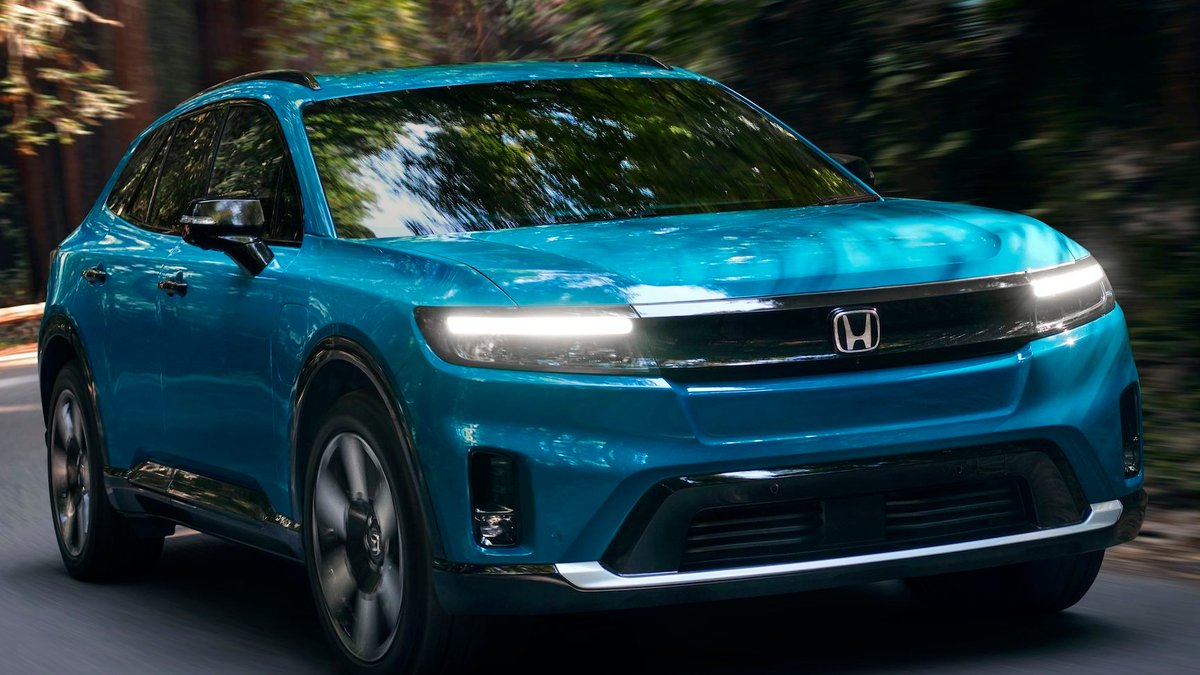
Honda announced it will cease production of the all‑electric Prologue after the 2026 model year, leaving the North American lineup without a pure‑electric vehicle.
Discontinuation details and market impact
The Prologue, introduced for the 2024 model year, was the sole EV offered by the automaker in the United States and Canada. In Canada the vehicle is sold only in British Columbia, Quebec and Ontario, with three trim levels priced between $60,090 and $70,090. All versions are all‑wheel drive and claim a range of 455 to 473 km, depending on the trim.
U.S. pricing starts at $39,900, but the model has faced several setbacks. It lost eligibility for the federal “green rebate,” which once lopped $7,500 off the sticker price, when the program ended in September 2025. Canada’s newer Electric Vehicle Affordability Program caps incentives at $50,000, a threshold the vehicle exceeds, rendering it ineligible for that support as well.
Sales have trended downward. Honda Canada reported 1,063 units sold in 2025, up from 532 in 2024, yet only 96 were delivered in the first quarter of 2025 compared with 290 in the final quarter of the previous year. In the United States, first‑half 2026 sales fell by almost half relative to the same period in 2025.
Related: Car buyers sue for tariff refunds
Owners will continue to receive service, parts and warranty coverage through Honda’s dealer network, according to a statement from Honda Canada.
Service will remain available.
Development background and related models
The Prologue was developed in partnership with General Motors. Honda designed the vehicle at its Los Angeles studio, while production occurs at GM’s Ramos Arizpe plant in Mexico, subjecting the model to import tariffs in the United States. It shares its platform with the Chevrolet Blazer EV, which remains on the market in Canada with front‑wheel‑drive pricing starting at $55,699 and all‑wheel‑drive at $59,199. No official comment has been made about whether the Blazer EV will follow the discontinuation.
Honda’s broader electric strategy has also been scaled back. The company unveiled its “0 Series” concept at the 2024 Consumer Electronics Show, promising a new EV platform and a $15 billion investment in a battery supply chain near its Alliston, Ontario plant. In March 2026, Honda cancelled the entire “0” project, and in May 2025 it paused the related battery‑plant investment.
Related: Choosing the Perfect Cut: Round, Princess, or Cushion for Your Diamond Engagement Rings
Later in May, the global chief executive said the automaker no longer has a mandate to be fully electric by 2040. The new focus will be on hybrids, with a target of 15 new hybrid models by 2030 and a next‑generation hybrid system slated for release within two years.
Honda will keep offering EVs in selected markets, primarily Japan and China, but those models will not be part of the “0” series.
Comparing Honda’s shift with past automotive trends, the retreat from a full‑electric push mirrors similar pullbacks seen at other manufacturers when early EV sales lagged behind expectations. Those firms often reverted to hybrid or internal‑combustion development while retaining limited EV offerings in regions where incentives remain strong.
The Prologue’s exit highlights the challenges automakers face in aligning product launches with evolving government incentives and consumer demand. While the vehicle’s range and pricing positioned it competitively within the EV segment, the loss of rebate eligibility and tariff pressures appear to have eroded its market appeal.


